Mel
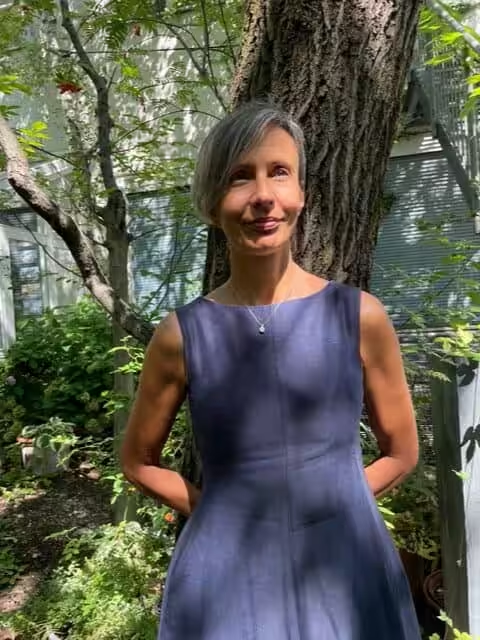
My name is Mel. Before getting ill, I was really active, cycling, swimming, running, painting, crafting, travelling, socialising…all the usual stuff. But then came Covid and Long Covid!
In April 2024, I was diagnosed with dysautonomia – largely thanks to my chronic illness app with wearable heart rate (HR) tracker. This shows my HR in resting, activity or overexertion zone, my heart rate variability, ‘energy consumption’ and gives overexertion alerts.
Realising from my app that my HR soared every time I moved, I tried to slow it down by calming my nervous system. I spent April in bed doing endless breathing and visualisation exercises. I imagined myself on a wonderful beach doing my breathing exercises in time with the waves! Also, having read that it’s important not stress over the symptoms, I visualised myself on the beach “sitting” with my symptoms. With time, in my mind’s eye, the ocean started to wash them away. (Sounds weird, I know, but I think this was my autonomic nervous system telling me it had understood it no longer needed to be in fight-or-flight mode!) The symptoms subsided in real life, and my tracker showed my HR falling and HR variability rising.
In May I started a slow reboot. Getting out of bed became a form of interval training. I’d put one foot on the floor, then wait for my HR to come down, then put the other foot down, then wait, slowly sit up, wait, and so on, avoiding overexertion as far as possible. Every time I massively overexerted, my app alerted me, and I would lie back down and start again. With time, overexertion took longer and longer to set in.
In late May I started walking. With the sun lounger set up in the garden, I would try and walk (slowly) for 30 seconds, lie down until my HR came down to resting, then walk another 30 seconds, rest again, etc. I carried on doing this until my nervous system got so stressed that my HR no longer came down. Then I lay down and did breathing exercises to get it back under control. I did this every few days, with recovery days in between. With time, the resting period between spurts of walking (initially several minutes) grew shorter. I became able to walk for several minutes non-stop without my system going into overdrive.
By June I could walk up to 1 km, lowering my HR by sitting/lying down on a bench whenever it got too high. I also started seated Qigong. Over the next few months, I used my app to monitor how much energy the same Qigong flow took each time, I could gradually see it fall.
In July and August the heat exacerbated my problems, so I was back to visualisations and breathing. But in September, I started exercising again and found that despite having been poorly, my visualisations and breathing over the summer had continued to benefit my autonomic nervous system: I could walk a couple of kilometres slowly without major symptoms. I started using my app to deliberately push my HR slightly further into my overexertion zone, hopefully without it staying there!
By the end of October I was walking 5km, pushing slightly higher and longer into overexertion with my app and sitting down for breathing exercises in between. It’s now November and I am walking 5 km – faster. When my HR gets too high, walking slower is enough to bring it down. No more lying down needed!
I’d like to start swimming again soon, and maybe running next spring, starting with 30-second spurts… If you haven’t tried a chronic illness app yet, I can recommend it. It’s doing the trick for me. I hope it does for you too. The whole process has been baby steps interspersed with almighty crashes, but also with milestones such as the first time I sat at a table for the duration of a meal!
It’s slow progress, but at some point, you notice how far you have come!
Good luck on your journey!🍀
PoTS UK appreciate that these apps and wearable devices can be of huge benefit to people, but we always advice consulting a healthcare professional and reading our web page on Using Technology at Home to Diagnose and Manage PoTS.