
Sophie
I was a normal fit and healthy 19 year old, loving and living life. Until one day I blacked out and my life changed forever. I went from running half marathons to black outs and 9 months off work. I became so ill that I was having seizures, losing weight, having allergic like reactions and an array of strange symptoms. I started dislocating my hips when I walked, having cold and numb patches all over my body, having nose bleeds, severe migraines, unexplained lumps and muscle spasms.
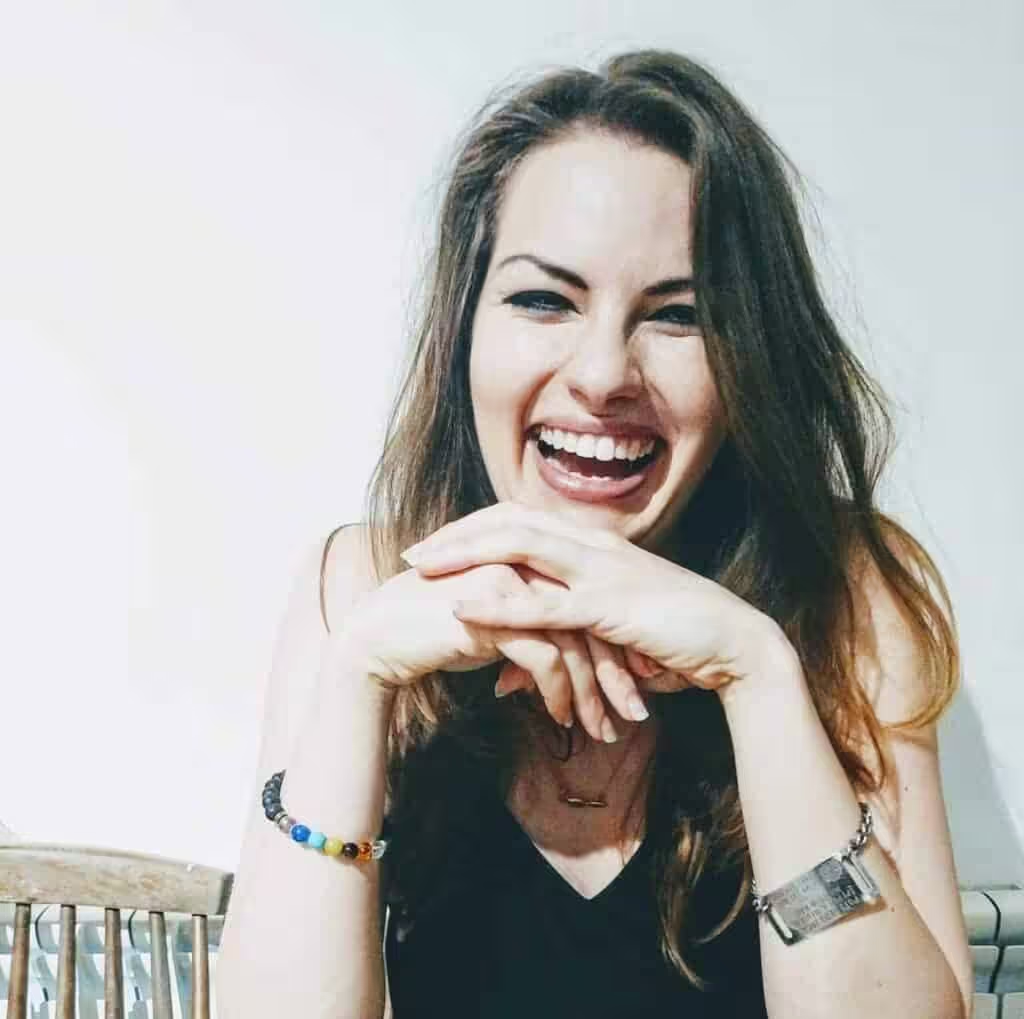
Over the next three years I gradually deteriorated, having been tested for lupus, lymphoma, suspected brain tumour, sarcoidosis to name a few. I cannot describe the abject terror of such a severe decline in health at such a young age. I was frequently and repeatedly being accused of mental health issues, eating disorders or being hormonal. I cannot stress enough how unbelievably frustrating it is to be disbelieved, sent home to ‘come back in a month’ and accused of being depressed. It took an enormous amount of tenacity and money to finally get diagnosed. I was ‘lucky’, it takes many patients decades of needless suffering before they are diagnosed.
My GP couldn’t work out what was wrong, having done basic tests and kept sending me away. After three years, 40 doctors and hundreds of appointment, I hit rock bottom and it was only when I became hysterical she agreed, under duress, to refer me to a cardiologist, despite saying I ‘definitely didn’t have PoTS’. She had ‘tested’ me incorrectly as had another doctor 2 years previous. It is staggering that such a thing could happen. When I eventually saw a cardiologist I collapsed in front of him and within a short time I had a diagnosis of Postural Orthostatic Tachycardia Syndrome. It was such a relief to finally be believed. Then came the complication of treatment – he didn’t have the expertise to deal with me and referred me to a Neuro Cardiologist. On hearing that it was a 12 month wait to see him and the only hope of getting any better, my parents funded private appointments. My symptoms had significantly worsened by this time.
My private consultant was fantastic
My private consultant was fantastic and it was so encouraging to finally be taken seriously and tested thoroughly to rule things in and out. I remember him asking if I was flexible (I was still recovering from a hip dislocation) and referring me privately to the ‘bendy people’ aka Rheumatology. I had a very bad rash during the appointment and a long history of weird allergy like symptoms and this indicated another condition called Mast Cell Activation Syndrome, which can accompany POTS. He referred me to an Immunologist, again privately, as MCAS is not well understood or treated by the NHS. After more tests and my clinical presentation, I was diagnosed with Ehlers Danlos Syndrome, Mast Cell Activation Syndrome and Postural Orthostatic Tachycardia Syndrome.
It was both a relief and terrifying to be diagnosed with these three serious, poorly recognised and seemingly untreatable (on the NHS) conditions. The worst part was not having any sort of prognosis – I was told don’t get a wheel chair, you’ll never get out. At this point I was still managing to work as a costume maker for Disney, but was having daily black outs; my work friends would just pick me up off the floor and carry on as though nothing had happened. I could still walk, but the second I’d stop I’d collapse. To combat this I spent most of the 4 years crawling along the floor in queues and sat in a heap on the floor. The worst memory of this was collapsing on the Overground and not only did no one help, I was kicked. After 45 minutes of shaking and being extremely unwell a lovely woman who worked for the NHS came across me and phoned an ambulance. Although PoTS isn’t life threatening, it’s life altering. I find it staggering that PoTS isn’t more widely treated as it has such an impact on a person’s day to day ability to do anything which isn’t lying down.
My diet was limited
Treatment was very long and continues to this day. My private immunologist was fantastic at creating a plan and although it was very long and drawn out, stabilizing my mast cells had a profound impact on my health. I had no idea of the complexity of MCAS and that it was likely responsible for a whole host of symptoms, blackouts, angiodema, extreme brain fog, rashes, reactions to any pressure on my skin, and inability to cope with any noise, sickness, stomach issues – along with intolerances to many foods. My diet was limited to a few vegetables and rice. I was having frequent reactions to environmental changes such as thunder, fragrances and smells, exercise, and hormonal changes through the month. It took four sets of antihistamine to stabilize my mast cells. With a year of treatment, I was able to sit up again without blacking out and some of my symptoms were reduced.
The PoTS treatment came in the form of medication to increase my BP and limit my heart rate. Sadly holistic approaches like drinking more and excessive salt, which has helped some patients, was not sufficient enough to control it.
After 4 years of trying different medications I now have somewhat of a balance. I am able to stand most days and have more energy. It is still a daily battle, with random and sometimes severe reactions, dislocations and collapses.
I am one of the ‘lucky ones’
I am able to function (outwardly) relatively normally. I would stress that this is only because I didn’t give up in pursuing treatment or settle for a Chronic Fatigue diagnosis. I am lucky to have been able to afford nearly £15 000 of medical treatment which has given me a future and hope. These conditions are not well recognised, accepted or catered for by the NHS and I suspect they are not as rare as the statistics indicate, rather there is such limited ability to get appropriate and accurate diagnosis. Although the link between these conditions is medically unclear, my EDS presented years before the other conditions. I had seemingly random issues with my joints from a young age, but they we’re relatively minor so I didn’t question that there was an underlying issue. I suffered Labyrinthitis when I first blacked out, which appears to have triggered a cascade of other unusual symptoms.
Despite my challenges I am happy and healthy enough to have more normality in my life, run my own business and enjoy my 20’s. This wouldn’t have been possible without treatment and I would like to offer some hope to those who think they are beyond medical help. I’d also like to be an aspiration to doctors that might see patients with long and unusual medical histories, to feel they are able to make a difference. The right specialists have literally changed my life and given me a future – I can’t thank them enough.