
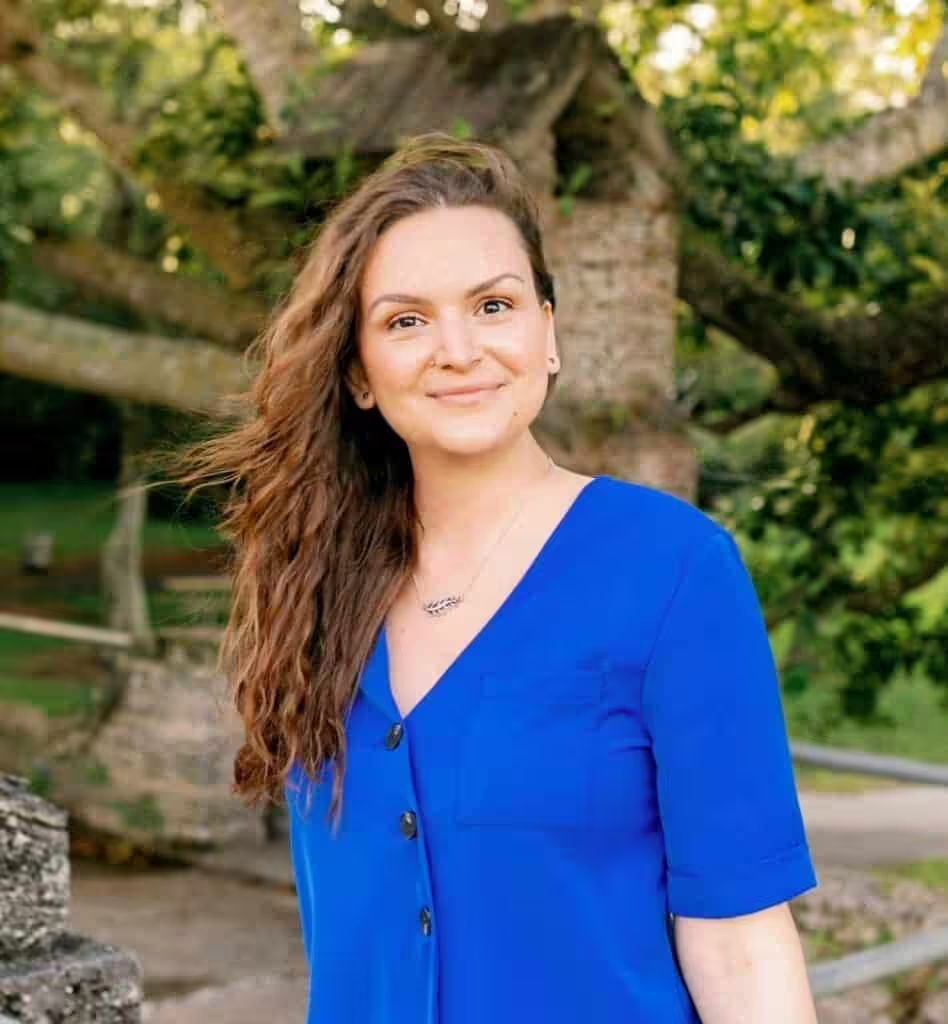
Ioana
In the summer after my first year at university, is when the chest pain and palpitations started. They seemed to only be triggered by heat. I would be standing outside, and the chest pain would start. The pain would then radiate to the left side of my back, up the left side of my face, and down my left arm. After the pain would stop, I would start sweating profusely, get painful muscle spasms, and be incredibly fatigued.
I started visiting doctors and had stress tests, EKGs, echo, and blood work done. I was told that everything was fine but that the symptoms were due to stress and being out of shape. In the fall, the symptoms would subside, and the following summer, they would come back with a vengeance. This continued to be the pattern. Every summer, I would visit doctors, and they ordered the same tests and told me the same thing: that it’s due to stress.
Then, about a year after finishing university, the palpitations and chest pain started while inside an air-conditioned room. From that point on, it felt like something had just broken. As soon as I moved or even talked, my heart rate would go into the 170s. I was out of breath going from my bed to the couch. I was absolutely terrified.
Finally diagnosed
My doctor ordered a Holter monitor and the tilt table test. At that point, 5 years after the chest pain started, I was finally diagnosed. I was so relieved that I finally had an answer. I was put on beta blockers. These allowed me to go on walks again. I thought that I could get my life back.
Everything was great at first. The beta blockers made me feel quite tired and like I was in a fog, but the benefits were greater than their side effects.
Then the palpitations, chest pain, fatigue, muscle pains, brain fog, lightheadedness, etc. all came back. They upped my dosage which helped with the heart rate and palpitations, but it did not do anything for the other symptoms. The medication also lowered my blood pressure even further, which caused me to feel even more lightheaded and weak.
Symptoms worsened
Over the next year, I started accumulating more diagnoses as my symptoms worsened. I was diagnosed with SIBO, gastroparesis, Raynaud’s, hEDS, MCAS, and a few others.
At this point, my only focus was on resting enough to make it through another workday. Getting ready in the morning exhausted me, and I would be so tired, I often cried on the way to work. All I needed was rest. I had an office job, so I luckily got to sit all day. But I would come home even more fatigued and try to gather enough spoons to make it through the next day. I would spend the weekends recuperating for yet another week.
I soon realized that I did not know how much longer I would be able to work. I was hanging on by a thread. I was eventually on medical leave, which helped me feel a bit better, but the fatigue quickly caught up. At that point, I realized something had to change.
I had briefly tried various lifestyle interventions (exercise, meditation, etc.), but the fatigue made it hard to be consistent with anything. I would have good days where I could do things and then crash so badly the following days, and my routine would be disrupted.
More rest
My first step was to incorporate more rest into my day so that I could get a bit more energy. I started being quite intentional with my pacing and how I spent my time. I incorporated breathing exercises, meditation, and mindfulness a few times a day.
Then once I felt I had a bit more stability, I drastically changed my diet. This made a massive difference in my energy levels. Before I felt like I had to constantly eat, and now I was able to go for hours without eating and my energy would not suffer.
The last step was to incorporate movement. We keep getting told how important movement is for PoTS, but when I was at my worst, movement seemed impossible to implement. I would have to recover for days afterward, and when I had a good day, I didn’t want to spoil it by getting a flare-up from the movement. I worked through the Levine protocol, starting slowly at first until I built more resistance.
PoTS no longer controls my life
This is a condensed version of my story, but I was able to ultimately get to the point where I am now. I still have PoTS. But PoTS no longer controls my life. I will have a flare-up maybe twice a year, whereas before, I felt like I was in a constant flare-up. I can now shower, go grocery shopping, and go on a hike, all on the same day.
This took a really long time, so I decided to change fields and become a certified health coach to help others with PoTS shorten their journey. When I was going through this, I felt so alone and so overwhelmed, and I didn’t want anyone else to have to feel the same way.
My two biggest tips for PoTSies would be:
- Learn about PoTS: PoTS UK has great information on its website, as well as very informative webinars.
- Get Support: Join a support group. Work with a health coach on implementing the lifestyle changes. See a therapist. Or just reach out to family and friends.
If you’re a fellow PoTSie reading this, I want you to know that you’re not alone. I know that right now it might feel like an uphill battle. But no matter where on your journey you currently are, it is totally possible to live a life full of beauty and energy not dominated by your illness.