
Becca
Hi, I’m Rebecca. I’m 40 years old, and I live in Kettering, Northamptonshire. My experience with PoTS began over a decade ago, although at the time I had no idea what was really going on.
I was repeatedly told it was anxiety, which made those early years incredibly frustrating and isolating. It wasn’t until just over two years ago that I received a formal diagnosis, after seeing a private consultant who truly understood the symptoms I’d been battling for so long.
The past 10 years have been extremely challenging. I’m very sensitive to medications, so I haven’t been able to take any of the standard treatments for PoTS. Instead, I rely on non-medical management: staying well-hydrated, taking electrolytes, and doing gentle gym sessions every other day—when I feel well enough. I now use a walking stick when I’m out and about, as my legs often give way and I need the extra support. For longer outings or when I’m particularly tired, I use a wheelchair, which allows me to get out and still be part of things without pushing my body beyond its limits.
At the moment, I can’t go out on my own and always need a family member with me. I haven’t driven for several years, which has been a big adjustment. I rely heavily on my parents, who support me every single day—physically, emotionally, and practically. Whether it’s helping me get to appointments, assisting me when I feel faint, or just being there for company and reassurance, they are my constant lifeline. Their love, patience, and commitment never waver, even on the hardest days. I truly don’t know how I’d manage without them, and I’m so grateful for everything they do, often without being asked.
One of the hardest parts of living with PoTS is the isolation it can bring. I miss being able to go out with friends or make spontaneous plans. Even when I want to, my body doesn’t always cooperate—and that’s something many people struggle to understand. Over time, some friends have drifted away, simply because they couldn’t relate or didn’t know how to support me. That part has been really painful. You end up feeling left out of life in so many ways. But I’ve also come to learn who my true supporters are, and I hold onto those connections closely.
Despite everything, I do my best to stay active. I try to go to the gym a few times a week—not to push myself, but to build and maintain strength in my legs. I also still attend a weekly tap dance class. Dance has been part of my life since I was a little girl, and even though it’s now much more difficult, I’m determined to keep going. I don’t want to give up something that brings me joy and a sense of normalcy.
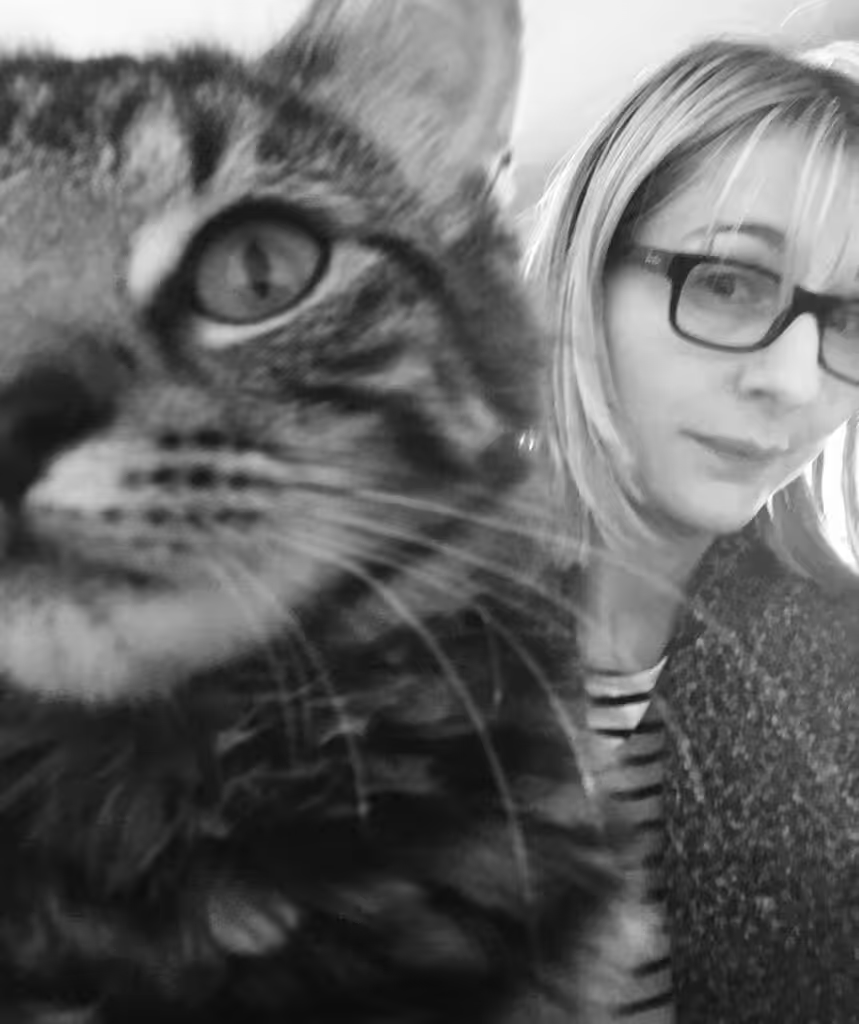
I’m also fortunate to be able to continue working. I run a freelance design business from my home studio, which has been a real blessing. Getting absorbed in my creative work helps take my mind off PoTS for a while. Of course, I have to remind myself to get up and move around regularly to stop blood from pooling in my legs and feet. I’m also lucky to have my cats keeping me company whilst i work—one of them always seems to sense when I’m feeling particularly unwell and quietly stays by my side. That small comfort makes a big difference on tough days.
One of the hardest parts of living with PoTS is the fear of collapsing when I’m out in public. It can be terrifying—not just physically, but emotionally too. I used to worry so much about what people might think or how they might react if I suddenly fell down. But over time, I’ve learned that it’s nothing to be ashamed of, and it’s not something to fear. My body does what it needs to, and sometimes that means going to the ground. In fact, I’ve come to think of the ground as a bit of a companion—I’ve spent enough time there, after all!
I’m sharing my story to raise awareness of PoTS and how differently it can affect each person. There’s still a lack of understanding—not just among medical professionals, but also friends and family. One of the most common questions I hear is, “Are you better now?” It’s hard for people to understand that PoTS is an ongoing condition. I may never be fully “better,” but I’m learning to manage it the best I can.
Each day brings new lessons. I’m learning to listen to my body more closely, to pace myself, and to accept help when I need it. And most importantly, I’m learning that I am not alone.
To my fellow PoTSies: we may all experience this condition differently, but one thing’s for sure—we’ve got this.